Vancouver has beautiful nature and a lot of people, but it also has a lot of rain. It can be a tough place for Lower Mainland company owners to find outside signs. If the sign material is poorly chosen, it can be pristine one month and faded, rusted, and peeling by the next.
You want a sign to last a long time. You want it to look good and represent you and your company professionally, regardless of the weather. There is a lot more money to be made if the choice of the sign material goes beyond looks.
\/Which materials resist the rain the best? Here is a guide to the best materials for long-lasting signs in Vancouver
Aluminium: A Great Option
There is one material for rain that stands above the rest, and that is aluminium. It is very light and powerful, and for Vancouver, it is excellent as it does not rust.
Aluminium is an excellent substrate for exterior signs, etc, but aluminium is not easily destroyed by moisture, unlike steel, which rusts when moisture is found. Aluminium is also perfect for exterior fascia signs, exterior parking signs, and large exterior signs that need to have a lot of detail.
Aluminum Their Benefits
Weather Resistant: Aluminium can take rain, snow, and salty air and won’t corrode.
Flexible: Aluminium can even be used for channel letters where it is illuminated. It can be coated, painted, or have vinyl graphics put on it.
Long Lasting: Aluminium exterior signs can last for 10 years or longer with minimal maintenance.
Dibond: Aluminium Composite Panel
Dibond is an excellent option for people who want aluminium but need a flatter composite panel. It consists of 2 thin aluminium sheets and a solid core of polyethene, which makes Dibond lighter than solid aluminium. It won’t bend, and it gives you the option of putting vinyl graphics and digital prints on it.
Suitable for All Flat Panels
Dibond looks excellent and does not flex or corrode, which is why it is popular for:
· Real estate development site signs
· Construction site signs
· Building fascia signs
· Wall-mounted directional signs
Dibond tends to stay the same size even when the temperature changes, keeping your brand presentable and sharp.
Acrylic (Plexiglass)
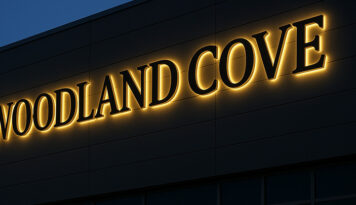
When thinking of illuminated signs made of clean and polished material, you’re likely thinking of acrylic. Also known as Plexiglass, it is an essential material in the advertising industry.
While some plastics yellow and get brittle when exposed to sunlight, cast acrylic stays the same, making it a popular choice for the faces of lightboxes and channel letters. It is mainly used for channel letters and lightbox face material due to its excellent light transmittance.
Craftsmanship and Appearance
Acrylic mimics the look of traditional glass, adding an upscale look to your store, without being as fragile. In Vancouver, where the sky is often grey, illuminated acrylic signs make your business look inviting, even at night. It does a good job at keeping its colour for a long time, as long as you choose high-quality acrylics or UV-resistant colours.
High-Density Urethane (HDU)
Looking for a sign that has dimension (one that looks like wood and won’t rot)? High-Density Urethane (HDU) signage is the answer.
Wood signs have a classic and traditional appeal, especially in neighbourhoods like Gastown or Kitsilano. The thing about wood is that it is organic. It absorbs moisture, continues to swell, and cracks until it eventually rots. That’s the beauty of the rainforest, and that’s why HDU is great. It’s a closed-cell foam that is completely waterproof.
The “Forever” Wood Alternative
HDU can be sandblasted, routed, or carved, similar to wood and is excellent for beautiful textured backgrounds and raised letters.
Impervious to Moisture: Since it’s foam, it cannot absorb moisture. It won’t rot or crack like wood.
Superior Paint Finish: Finishes are more durable on HDU than on natural timber due to HDU’s consistency.
Perfect for Creativity: It can take just about any shape, making it great for creative, dimensional storefront signs.
Making the Right Choice for Your Business
The right choice for a signage material is the first step to ensuring it survives Vancouver’s beautiful and unpredictable climate. The second step is fabrication and finishing. Even the best aluminium will be ugly and unappealing if the paint finish looks cheap or the installation is done poorly.
When choosing materials for your outdoor signs, think about your location. Are you next to the ocean? Use aluminium to prevent salt corrosion. Is your sign south-facing? UV protection will be your top priority to avoid fading. By aligning the material to your environment, you make sure your brand stays visible, rain or shine.