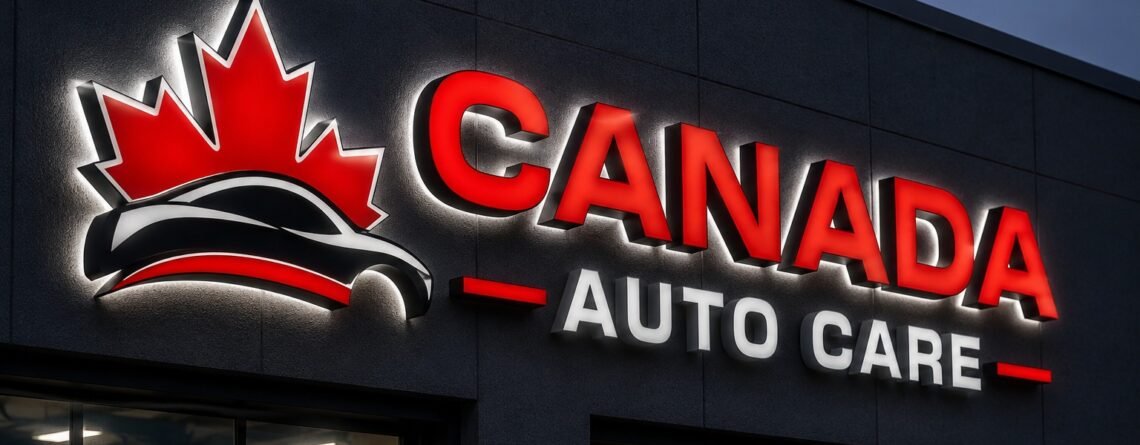
If you’ve ever walked past a business and found yourself reading their sign almost without
meaning to, there’s a decent chance it was a channel letter sign doing the work. They’re the
kind of signage that registers instantly, looks intentional, and holds up in any light condition. For
businesses across BC that are serious about how they show up on the street, 3D illuminated
channel letters have become the go-to format, and for good reason.
This post covers everything: what they are, how they work, what they cost, the different styles
available, and how to figure out if they’re the right fit for your storefront. At The Sign Expert, a
Surrey-based signage company serving businesses across the Greater Vancouver region,
illuminated channel letters are one of the most requested products. Over more than a decade of
designing, fabricating, and installing commercial signs across BC, the team has seen first-hand
what makes these signs so consistently effective for businesses of all sizes. Whether you’re
opening a new location or finally upgrading from a tired old sign, this is a solid place to start.
What Are Channel Letter Signs, Actually?
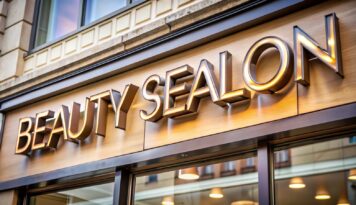
Channel letters are individually fabricated, three-dimensional letters or shapes that are built from
aluminum and typically mounted directly onto a building facade or a raceway (a rectangular
metal mounting strip). Each letter is its own self-contained unit with a face, sides (called the
returns), and usually a back panel.
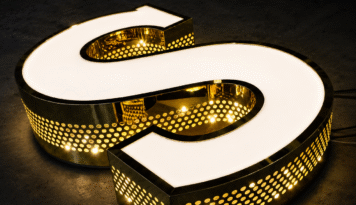
The “channel” in the name refers to the shape of each letter when viewed from behind. It forms
a channel or cavity, and that cavity is where the light source lives. Modern channel letter signs
use LED strips or modules inside each letter, which gives them that clean, even glow.
They’re a core product in the world of commercial signage solutions, and they show up
everywhere: retail storefronts, medical offices, restaurants, hotels, gyms, banks, and pretty
much any business that wants its name to be read clearly from the street.
The Different Types of Channel Letters
Channel letters are of different types, customers tweak them as per their personality and brand
approach. There are a few distinct styles, and each creates a different visual effect. Knowing
the difference helps you make a more informed decision when talking to a professional sign
maker. Let’s understand the different types one by one.
Front-Lit Channel Letters
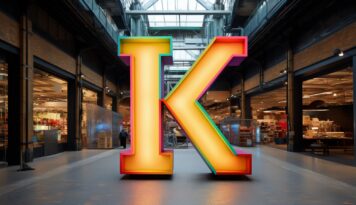
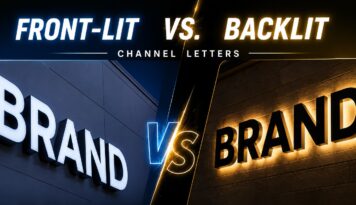
Often the most common style, in front-lit channel letters, the face of each letter is made from
translucent acrylic in whatever colour matches your brand, and the LED light shines forward
through it. At night, the letters appear to glow from within. During the day, the coloured acrylic
still reads well and the 3D depth of the letter gives the sign a premium look.
Reverse-Lit (Halo-Lit) Channel Letters
In this style, the face of the letter is typically made from opaque material (often brushed
aluminum or painted steel), and the light is directed backward toward the wall. What you see at
night is a soft halo of light surrounding each letter rather than the letter itself glowing. It’s a more
subtle, upscale look that tends to work well for professional services, boutique retail, and
hospitality businesses that want something elegant rather than bold.
Open-Face Channel Letters
These have no acrylic face at all. The LED modules or neon tubing inside the letter are
exposed, giving a more vintage, handcrafted feel. You see this style a lot in bars, entertainment
venues, and restaurants going for a retro aesthetic.
Front and Back Lit (Combination)
Businesses also approach this kind of letter styling as well. Light shines through the acrylic face
and also illuminates a halo behind the letter. It’s the most visually dramatic option and tends to
work best on darker wall surfaces where the halo effect can actually be seen.
Why Businesses Choose Illuminated Over Non-Illuminated
Businesses often are about getting the best outcomes while also saving costs wherever
possible, which is why an obvious question pops up: Do you really need the illumination, or is a
non-lit sign good enough?
Here’s the honest answer. It depends on your hours, your location, and how much passive
visibility matters to your business. Most importantly, how do you want your brand to be
perceived by your customers, a premium and professional one or just some other business who
believes in doing things in just okay fashion.
A perfect approach can be: If your business closes at 5 PM and sits on a well-lit pedestrian
street, a non-illuminated dimensional sign might do a perfectly fine job. But for most businesses,
especially in a place like Greater Vancouver where winter evenings are long and overcast days
are frequent, LED signs for business aren’t a luxury. They’re a practical tool for being seen
during the hours when a lot of people are actually out and about.
Materials and Build Quality: What Goes Into a Good Sign
A great sign is made from great quality materials. When you’re getting a quote from a signage
company, understanding what materials are involved helps you evaluate whether you’re
comparing apples to apples.
Aluminum is the standard material for the letter housing. Known to be lightweight, corrosion-
resistant, and able to hold paint well, this is a go to choice when you want your sign to last really
long. Sure, cheaper alternatives exist, but aluminum is what reputable sign companies use
because it holds up over a 10-15 year lifespan without breaking a sweat.
Acrylic faces are highly customizable, come in hundreds of colours and translucency levels.
The quality of the acrylic matters because cheaper sheets can yellow or crack over time with UV
exposure.
LED modules vary considerably in quality. Higher-quality LEDs maintain consistent colour
temperature over time and don’t burn out unevenly. This matters because a sign where some
letters glow brighter than others looks worse than no sign at all. Reputable sign companies in
BC will spec LED systems with proper warranties and UL or cUL ratings for exterior use.
How to Finalize the Right Sign Company
Not all companies offer the same quality, and the range of skill in commercial sign makers like
the Sign Maker, is wider than most people expect.
A few things to look for:
Work with a company that specializes in commercial signage, not just a print shop that also
does signs on the side. Channel letter fabrication requires specific equipment and expertise. It
doesn’t harm to ask for a portfolio of installed work, ideally on locations you can drive by.
Look for a company that offers end-to-end service: design, fabrication, permits, and sign
installation services. Fragmented processes lead to delays and accountability gaps.
If you’re in the Lower Mainland, working with a local sign maker in BC has practical advantages.
They know the municipalities, they can visit your site before quoting, and they’re accessible if
something needs attention post-install.
Final Thoughts
3D illuminated channel letter signs work because they solve a real problem: being noticed in a
busy commercial environment, in all weather conditions and at all hours. They’re durable,
customizable, and when done right, they look like a natural extension of your brand rather than
an afterthought bolted to your building.
If you’re in the research phase and based anywhere in the Greater Vancouver area, The Sign
Expert sign makers are worth talking to. With over 10 years of experience in custom business
signs, a full in-house process from design to installation, and service covering everything from
Surrey and White Rock to Vancouver, Langley, Richmond, and beyond, they bring the kind of
local knowledge and end-to-end capability that makes a real difference in how a project comes
together. Contact The Sign Expert today to get a free quote and talk through your options.
The sign is an investment in your business’s visibility and credibility. It’s worth doing right the
first time.