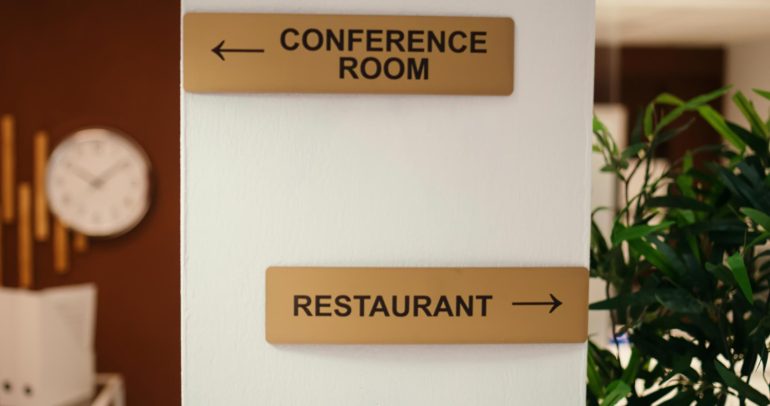
Imagine you’re roaming around a place that’s just foreign to you, in such a scenario, what can you count on to figure out your way to your destination? Signage, is your answer.
Signages have a prominent role in talking with your customers, especially when visual recognition is a must. Whether you are a storefront, retailer, business owner, or someone planning for an event that needs tangible visibility, signage aims to strengthen your brand presence.
Owners that manage to differentiate what indoor and outdoor signs actually are, can make more strategic decisions and guide their customers better.
Indoor and outdoor signage live in completely different worlds. One battles BC’s coastal weather, highway glare, and temperature swings. The other competes with lobby lighting, customer sightlines, and brand experience expectations.
In this blog, we will discuss all aspects one must take into consideration before choosing their signage, and help them understand how to choose indoor &outdoor signs that perform where it matters.
Purpose & Placement of your Business Signage
Deciding which sign would suit your needs best is an important decision and you must know the purpose of each before anything. Outdoor signages are aimed to stop, attract and guide customers. These storefront signs and directional pylons work best when they’re legible from 5-100 feet, especially along busy corridors or arterial roads. Indoor signs are aimed for a different role that includes brand reinforcement, wayfinding, warnings, and store experience.
Now that you have the clarity, you can now decide when to use indoor signs vs. outdoor signs and where your brand message will probably create the strongest impact.
For many business owners, taking the final call on which signage is better for business promotion involves combining both indoor and outdoor displays to create a complete visual communication system.
Here is a breakdown of the differences, advantages, and ideal use cases for each.
Understanding Indoor Signage
Indoor signage is usually any visual display within an enclosed space such as a retail store, shops, office, service offering centre, or event location. Indoor signs are designed to enhance brand experience and customer experience once someone is already inside your place.
Benefits of Indoor Signage
Improved Customer Experience
Indoor signs enable your visitors to navigate the space effortlessly. Signages like directional signs, department labels, and informational displays mitigate confusion and make the environment more welcoming.
Multiple Branding Opportunities
As customers are already engaged with your business, indoor signages are a perfect opportunity for reinforcing your brand identity. Be it wall graphics, digital displays, and point-of-sale signage, they all can be leveraged to communicate your brand story effectively.
Cost-Effective and Flexible
Indoor signages can usually be made of less durable materials than outdoor signs, making it more affordable. Which is why they are also easier to update or replace, allowing businesses to adapt messaging quickly for promotions, or seasonal offerings.
When to use Indoor Signage
Indoor signages deliver best results when your objective is to inform, guide, or upsell. Retail stores, restaurants, service offices and events can benefit greatly from clear, attractive indoor signs that enhance the overall customer journey and brand identity.
Understanding Outdoor Signage
Outdoor signage serves a different purpose. They are designed to get attention from outside your business. These signs are often for potential customers, bringing the impact of your brand and services offerings, making them a crucial marketing tool.
Key Benefits of Outdoor Signage
Elevated Visibility
Thinking of standing out in the crowd? Outdoor signage does exactly that, it elevates your visibility in busy streets, shopping strips or commercial areas. A well designed signage is sure to draw attention from both pedestrians and drivers.
24/7 Advertising
Know someone who can advertise for you 24/7 on the street? Outdoor signage is your answer, unlike many forms of marketing, outdoor signage works around the clock. Even when your business is off in non-working hours, your signage continues to promote your brand and location.
Durable and Weather-Resistant
Outdoor signs are built to withstand harsh weather conditions, including rain, sun, snow and strong winds. Commercial signage solutions use materials like metal, acrylic and weatherproof vinyl to ensure longevity and consistent performance from the signage.
When to use Outdoor Signage
Outdoor signages are best suited for attracting new customers and increasing foot traffic. If your business relies on visibility such as retail shops, service providers, strong outdoor signage is essential. It serves as a great opportunity for new businesses looking to bring in new customers and buyers to the shop.
Indoor vs Outdoor Signage: Key Differences
Though both the signs serve important roles, understanding the crucial differentiating points between indoor and outdoor signs helps businesses choose the perfect solution for their brand.
| Feature | Outdoor Signage | Indoor Signage |
| Objective | Get attention and build brand awareness. | Inform, guide, brand experience and drive direct sales. |
| Target Audience | Passersby, drivers and potential new customers. | Engage potential customers/ visitors already inside your place. |
| Logetivity | High; required to resist UV rays, snow, rain and strong winds. | Moderate; focused on aesthetics over weatherproofing. |
| Typical Cost | Higher owing to robust materials and complex installation and permits. | Usually more affordable and easier to install. |
| Common Types | Billboards, pylon signs, monument signs and awnings. | Way finder signs, warning signs, menu boards, and lobby displays. |
Which One is Best Suited for You?
a. Take Your Business Goals into Consideration
If your primary objective is to bring in new customers, outdoor signage is the way to go. If you want to improve brand experience, customer interaction and uptick in-store sales, indoor signage is a no brainer.
b. Consider Your Location
Businesses situated in high-traffic areas benefit majorly from outdoor signage. On the other hand, shops in malls or office buildings rely more on indoor signage to shine within shared spaces.
c. Imagine Customer Journey
The truth is, the most effective strategy often involves a combination of both. Outdoor signage attracts and brings customers in, while indoor signage helps in guiding them, informing them, and encouraging purchases.
Why a Combination Works Best
Here is the thing, one is incomplete without the other. Rather than choosing one over the other, numerous businesses get the best results by leveraging both indoor and outdoor signages.
Take an example, a mechanic store might use a bold storefront sign to bring in customers and indoor displays can help them highlight promotions and direct traffic within the store. This unified approach ensures a flawless experience. It ensures the customer’s journey, from the moment a customer notices your business to the point of purchase is seamless and with brand identity.
Conclusion
Indoor and outdoor signage each serve a different but shared purpose. Outdoor signage is designed to capture attention and drive traffic to the shop, the indoor signage enhances the customer experience, boosts engagement, and translating customers into sales.
The perfect choice, at the end, depends on your business objectives, location, and budget. In most scenarios, the solution is a balanced approach that leverages the strengths of both.
By getting to know how each type of signage works, businesses can work with a more effective visual strategy that not only attracts customers but also keeps them coming back.
Whether you’re upgrading your storefront, refreshing your lobby, or expanding fleet branding, we help businesses across Surrey, White Rock, and Vancouver pick the right materials, handle permits, and install to code. Get a sign quote from a team that asks the right questions first. Contact us today.
FAQ: Quick Answers for Business Owners
– Do indoor and outdoor signs require different permits?
Most BC municipalities require permits for exterior signs over a certain size or illumination level, especially for storefront signs and channel letter signs. Indoor displays hardly need permits unless they involve structural modifications or commercial window treatments. A sign company in Surrey BC like the Sign Experts should handle this for you.
– Can I use the same design for indoor and outdoor signage?
Yes, while you can keep branding consistent, the choice of materials and lighting must adapt. Outdoor signage designs need higher contrast, weather-resistant substrates, and proper illumination. On the other hand, indoor versions can use finer details, softer lighting, and lighter materials. You can always request scaled mockups to test readability in both environments.
– How do I find a reliable sign shop near me for installation and repairs?
Look for a local sign maker in BC like the Sign Experts. Check if they carry liability insurance, offer warranties on materials and LEDs, and provide transparent sign installation services. Ask if they handle city permits, structural engineering, and emergency sign repair.
– What’s the best way to get started?
Get a sign quote from The Sign Experts that breaks down design, fabrication, permits, and installation. Whether you need custom storefront signs for small business setups or full commercial branding inside and outside, start with a clear goal, budget, and timeline.